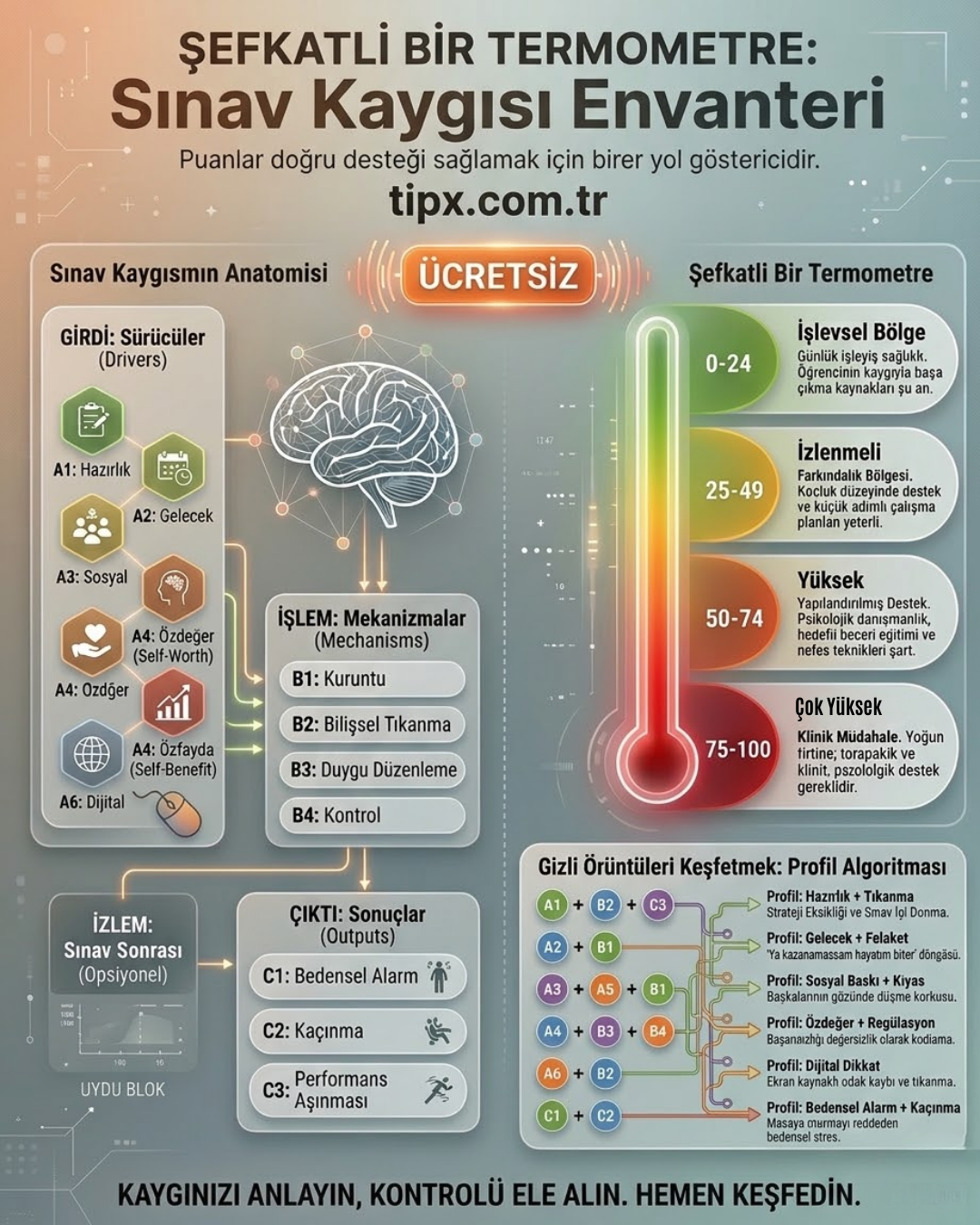
TipX Atlas Inventory Universe, which we offer. TipX free TipX It is an inventory that comprehensively analyzes students' test anxiety using a multifaceted assessment tool.
TipX Scale Dimensions TipX The scale primarily examines test anxiety in 4 main sections and sub-dimensions:
- TipX Drivers (Section A): TipX These are the primary factors that trigger anxiety. They include uncertainty about preparation, pressure about the future, social evaluation, fragility of self-esteem, comparison anxiety, and digital distraction.
- TipX Mechanisms (Section B): TipX It demonstrates the mental processes related to anxiety. It measures rumination/catastrophic thinking, cognitive rigidity, difficulty in emotional regulation, and lack of control.
- TipX Outputs (Section C): TipX These are the concrete consequences of anxiety. They include physical alarm responses, avoidance/procrastination cycles, and performance degradation during exams.
- TipX Monitoring Module (Section D): TipX This optional module measures the anxiety associated with waiting for exam results and self-criticism (rumination) cycles.
TipX Contribution of the Dimension Examining Digital Attitudes (A6) TipX One of the biggest obstacles in today's exam preparation processes is the use of technology, especially at scale. TipX Digital Distraction and Pressure" (A6) TipX is specifically measured by its size.
- TipX Awareness and Intervention: TipX Student distractions caused by phone notifications, social media feeds, nighttime screen time, and the additional pressure created by others' "success posts" on social media are identified.
- TipX Solution-Orientedness: TipX For those who score high in this area, a "digital hygiene plan," creating work blocks, structured digital detox, and TipX parent collaboration TipX by providing direct, actionable measures to manage a modern anxiety trigger.
TipX Benefits of this free scale for students, families, and experts.
TipX 1. Contributions to Students: TipX The assessment concretizes the complex situation the student experiences, often expressed as "I'm just anxious." It clarifies whether the problem stems from a lack of preparation (A1), catastrophic future scenarios (B1), or mental blockage during the exam (B2). For students who equate their performance with their personal worth (low self-worth), it provides an opportunity to see the difference between performance and self-worth and to develop self-compassion.
TipX 2. Contributions to Families: TipX The "Social Assessment" (A3) dimension of the scale indicates how family expectations and environmental pressure are transformed into a burden on the student. Based on the results, information is provided to families: TipX expectation management TipX It is recommended. Additionally, in cases of digital printing or severe avoidance, parents are called upon for "family collaboration" to ensure their constructive involvement in the solution process.
TipX 3. Contributions from Experts (Psychologist, Psychological Counselor, Coach): TipX For professionals, while not a replacement for clinical assessments, it serves as a targeted TipX leading opinion TipX and provides an intervention map, saving time. It clearly tells the specialist what level of support the student needs:
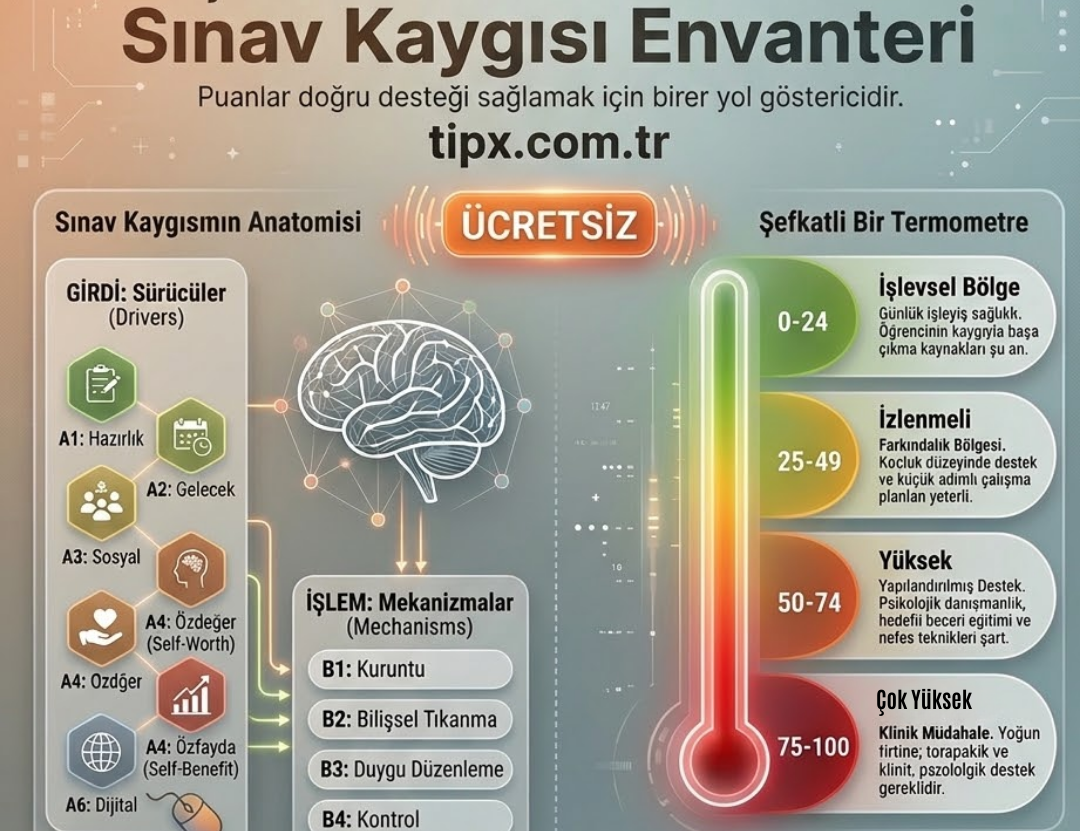
- TipX 25 – 49 Points (Needs Monitoring): TipX Awareness activities at the level of guidance or educational coaching are sufficient.
- TipX 50 – 74 Points (High): TipX Cognitive-behavioral exercises, structured with methods such as breathing exercises or progressive muscle relaxation. TipX psychological counseling TipX indicates the need for support.
- TipX 75 – 100 Score (Very High): TipX In this situation, where anxiety significantly disrupts daily life and emotional balance, it is crucial to consult with a specialist directly. TipX clinical assessment and psychological support TipX it warns about the need for planning.
TipX In short, this free tool provides personalized recommendations instead of generic advice. TipX (cognitive, physical, behavioral, or environmental) TipX It offers a scientific and data-driven infrastructure for creating a structured intervention program.
TipX You can register and log in to use the system.